A patient holds her phone camera below eye level, smiles for a video, and the nasal tip tucks downward just enough to flatten the profile and shorten the upper lip. She is not ready for surgery. She resists filler in the nasal tip. Yet she wants control, especially on camera. In this narrow scenario, a precise micro-dose of botulinum toxin to the depressor septi nasi and, occasionally, the anterior fibers of the levator labii superioris alaeque nasi, can change the dance between tip rotation and upper lip motion. The move is small, but the impact on animation and self-image is real.
When a micro-toxin solution beats a scalpel
Nasal tip rotation control with Botox sits at the intersection of aesthetic nuance and functional respect. We are not building a new nose. We are modulating a muscular vector that pulls the tip downward during smiling, talking, laughing, or stress clenching. The ideal candidate has a relatively balanced dorsal line at rest, shows dynamic tip droop with animation, and wants a reversible, low-downtime intervention. Patients who rely on expressive faces at work, like actors or public speakers, often benefit from small adjustments that soften specific movements without muting their micro-expressions.
Clinical indications are narrower than many expect. Botox is not a fix for heavy or bulbous cartilage, thick sebaceous skin, or major structural rotation deficits. It is a targeted tool for dynamic tip depression, especially in those with a strong depressor septi nasi, short columella, or dominant upper lip elevator interplay that exaggerates the tip drop. It is suitable in combination approaches, such as conservative toxin for muscle balance paired with skin tightening devices on the lower third for improved skin recoil, or tiny filler adjustments in the radix for perceived tip lift. Each element must be staged to reduce migration risks and to preserve control over subtle changes.
Anatomy worth respecting, millimeter by millimeter
The depressor septi nasi originates from the maxilla above the central incisors, inserting into the nasal septum and columella base. When it fires, the tip pulls down and the upper lip shortens. Some patients also recruit the medial fibers of the levator labii superioris alaeque nasi or the nasalis in a pattern that amplifies the tip movement. There is considerable variability between right and left facial muscles, which partially explains why some patients report asymmetric droop or a twisted smile arc. In practice, palpation during animation is more informative than static inspection.
Depth matters. The muscle sits deep to the dermis and superficial to the periosteum of the anterior maxilla, depending on the exact point. Inject too superficially and you risk diffusion into skin or superficial perivascular tissues, increasing bruising without the desired functional change. Inject too deep and you might contact periosteum, which increases discomfort and bruising, and can create unpredictable spread. The goal is intramuscular placement at a shallow-to-mid depth, guided by tension palpation during an exaggerated smile.
Patient selection and prediction of effect
The best predictor of satisfaction is a test: ask the patient to perform a broad smile, a phonation sequence that elevates the upper lip (“ee,” “ah”), and a gentle snarl. Observe the nasal tip, columella, and upper lip length change. If the tip drops more than 2 to 3 mm during a smile and the upper lip simultaneously shortens, the depressor septi nasi is likely a key driver. Patients with prior rhinoplasty may also have altered muscle insertions or scar tethering that exaggerates the downward vector. Those with prior filler history in the tip or columella might show dampened movement due to scar or filler weight; they still respond to toxin, but dosing tends to be lower.
Age and gender can influence effect duration. Younger patients with more robust neuromuscular junction density and faster metabolism may break down the effect sooner, while older patients often enjoy a longer, smoother curve of benefit. Fast metabolizers, including high-output athletes, sometimes report shorter duration, which merits dosing recalibration over time and counseling about re-treatment timing based on muscle recovery instead of fixed calendars.
Crafting a plan that fits a face, not a template
Avoid a default dose. Animation patterns are idiosyncratic. In our practice, most first-time candidates receive a test dose on one follow-up cycle to calibrate. The goal is precision over instant correction. Too aggressive a first dose can lead to static changes in the upper lip that patients dislike, especially if they depend on speech clarity or maintain an expressive upper lip for performance work.
The plan considers several variables: dermal thickness, the tendency for bruising, anticoagulant use, and whether the patient needs the highest possible fidelity of micro-expressions for work. Injectors should consider thin dermal thickness as a risk for visible surface irregularity and diffusion into adjacent fibers; this often pushes us toward smaller aliquots with exceptionally slow injection speed for improved muscle uptake efficiency and reduced backflow. For anticoagulated patients, safety protocols include gentle pressure, ice, and avoiding deep or periosteal contact.
Prior data helps. If the patient has a record of response to other facial sites, note any asymmetry in effect, whether they show unit creep with cumulative dosing effects over consecutive sessions, and whether they have had any treatment failure causes such as neutralizing antibody formation risk factors. High cumulative doses across large regions, frequent booster sessions at short intervals, or use of certain high-protein formulations may increase risk over years. For nasal tip work, the total dose is small, but overall exposure matters when counseling long-term maintenance.
Technique: the small-field game
Marking begins with palpation and dynamic mapping. Ask the patient to smile widely. Place a fingertip at the columella base and feel the inferior pull. For some patients, EMG is overkill, but in complex cases or when asymmetric activation clouds the picture, precision marking using EMG can reduce guessing. Most of the time, careful palpation during animation is enough.
Reconstitution technique influences spread and reliability. We prefer a moderate saline volume that yields 2 units per 0.05 mL or similar, which allows for fine control without flooding the field. Very dilute reconstitution can expand the diffusion radius by injection plane and increase the chance of toxin contacting unintended fibers. Too concentrated can reduce coverage of the target and be unforgiving if the needle sits off-center by 1 or 2 mm. Use bacteriostatic saline per product guidelines, and reconstitute slowly along the vial wall to minimize foaming, which preserves potency.
Injection speed matters. A slow, controlled push reduces local turbulence, potentially improving muscle uptake efficiency and decreasing reflux along the needle track. Needle choice affects comfort and accuracy; a 32 to 34 gauge needle helps place tiny volumes accurately. Aim for intramuscular depth at the midline base of the columella, just above the spine of the maxilla. Slight bevel orientation downward often helps seat the deposit into the muscle rather than shallow dermis.
We typically start with micro-aliquots totalling 2 to 4 units to the depressor septi nasi, split across one or two points at the midline, with optional 1 to 2 units per side into the anterior fibers of the levator labii superioris alaeque nasi in select patients who recruit strongly and produce an overactive upper lip shortening. The number reflects a span observed in practice across different brands; always translate to brand-specific unit equivalence and never mix brands in the same session at the same site.
Diffusion, migration, and how to keep changes where you intended
Diffusion is not random. It follows a radius that depends on dose density, injection plane, tissue resistance, and local motion. The columellar zone is compact, and even a 3 to 5 mm diffusion radius can cross into adjacent fibers. To avoid migration patterns that affect smile arc symmetry or upper lip eversion, keep aliquots small, deliver slowly, and apply gentle compression after withdrawal to limit spread. Avoid massage. Ask the patient to refrain from vigorous upper lip movement for several hours.
Injection point spacing optimization matters when adding lateral points. If you treat the anterior levator fibers, place them high enough to avoid the orbicularis oris, which helps prevent unwanted changes in speech or lip eversion dynamics. Lateral points should sit at least a few millimeters from the alar base to reduce the risk of altering nasal flare control.
Sequencing with other facial toxins so the face still behaves like itself
A common mistake is to address the tip without adjusting nearby muscular balances. If you also plan to treat glabellar, frontalis, or lip lines, sequence injections so the net vectors harmonize. Treating the depressor septi nasi first, then re-evaluating the smile, helps decide whether micro-dosing the upper lip elevators or nasalis is necessary. This approach supports botox injection sequencing to prevent compensatory wrinkles. For instance, dampening the depressor occasionally leads to upper lip elevators overexpressing, which can accentuate vertical lip lines. In that case, 1 to 3 units per side to the lip elevators can smooth the result, provided you avoid lip stiffness. Patients with strong frontalis dominance also need careful calibration, as over-relaxing the frontalis can create an illusion of nasal heaviness when the brows descend.
Safety and subtlety over numbers and bravado
This is a tiny field with little room for error. Dosing caps per session safety analysis for the whole face is more relevant than for the nose alone, but the nose contributes to total exposure. Conservative first passes are wise, especially in patients with long gaps between treatments where dosing recalibration after long gaps is necessary. The risk of antibody formation is small, yet not zero. Factors include frequent high-dose schedules, short intervals between sessions, and certain formulation properties. Educate patients who intend to maintain treatments for years that spacing sessions by at least 3 months and avoiding unnecessary touch-ups lowers theoretical risk.
Bruising minimization techniques are straightforward: ice before and after, avoid deep periosteal contact, maintain steady hands, use fine needles, and apply brief pressure. For anticoagulated patients, the plan might shift to even smaller aliquots and absolutely minimal passes. Document any bruises and asymmetries, then correlate with technique notes to refine.
What to expect after: timing, feel, and function
Onset starts in 48 to 72 hours for most, with full effect by 7 to 10 days. The tip should show a mild upward rotation at maximal smile and a subtle increase in perceived upper lip length. The effect on resting facial tone is usually minimal if dosing is precise. Most patients observe that their resting photos look the same, while videos capture softer tip depression during speech or laughter. Actors and public speakers often report easier control of their smile arc without feeling blocked, which supports botox treatment planning for actors and public speakers.
Duration runs 8 to 12 weeks on average, sometimes longer in older or less metabolically active patients. Fast metabolizers may hover closer to 6 to 8 weeks. Re-treatment timing based on muscle recovery rather than fixed calendars tends to produce smoother, more natural maintenance. Some patients experience a botox NC mild headache from reduced facial strain when undue tension patterns ease, a small and incidental benefit in those susceptible to facial strain headaches.
Managing asymmetry and handling misses
Even careful plans can land slightly off. Effect variability between right and left facial muscles is common due to insertion and recruitment differences. When asymmetry appears, wait the full two weeks to declare a result, then add micro-corrections. Favor 0.5 to 1 unit touch-ups rather than full aliquots. If you have overtipped appearance or an unintended change in upper lip eversion dynamics, let it recover. Avoid chasing with antagonistic sites unless the functional cost is high.
Treatment failure, while rare at such small doses, may occur. Causes include insufficient dose, poor placement, hyperactive recruitment beyond the targeted muscle, or true resistance. Correction pathways include re-mapping the muscle by palpation under higher animation, adding lateral points to the levator fibers, or increasing total dose modestly at the next session. True resistance from antibodies is unlikely given the tiny doses in this region, but global history can hint at it; if the patient reports falling effectiveness across multiple areas and brands, consider a different formulation with lower accessory protein content and extend intervals.
Integrating with a full-face strategy
Nasal tip control should sit inside a larger aesthetic plan. If the brow heaviness is a concern after forehead treatment, addressing post-treatment brow heaviness requires lightening the lateral frontalis or preserving frontalis support medially. The nose reads differently when the brow changes. The smile arc symmetry also changes when mentalis or DAO treatments are performed; adjusting for balancing dominant depressor muscles in the lower face can create a better harmony that reduces the need for nasal tip dosing.
In patients with connective tissue disorders or thin dermal thickness, conservative dosing protects against unpredictable diffusion and bruising. In those with prior eyelid surgery, be aware that subtle alterations in brow position during fatigue can change nasal aesthetics in photos; plan doses that preserve enough frontalis lift reserve. For athletes, dosing adjustments acknowledge higher metabolic turnover and sometimes shorter effect duration, which calls for realistic expectations and tighter re-evaluation windows. For those with a history of ptosis, keep nasal dosing isolated at first and avoid simultaneous heavy glabellar treatment to reduce compounded risk of perceived facial heaviness.
Precision without paralysis
The aim is facial softening rather than a frozen look. Subtle facial softening vs paralysis is the guiding principle here. Two or three units can make or break perceived naturalness in the nasolabial junction and philtral column. Overcorrection risk analysis favors under-treating at the initial appointment, then fine-tuning after initial under-treatment at day 14. Patients learn their own response curve, and you avoid the long, unhappy wait for function to return.
Beyond the immediate aesthetic, there is a performance gain: by altering specific pull patterns, you improve facial proportion perception in motion, especially in three-quarter angles on camera. When the tip no longer dives, the midface reads more contiguous, the upper lip regains a hair of length, and the viewer perceives less fatigue or tension.
Practical protocol from chair to follow-up
- Pre-assessment: high-speed facial video in frontal and oblique views during smile and speech to map dynamic tip descent. Palpate during peak smile to locate maximal inferior pull at the columella base. Preparation: reconstitute for fine dosing control. Mark the midline point and any optional lateral points after animation mapping. Discuss expected changes in upper lip length during smile and the possibility of minor asymmetry requiring touch-up. Injection: 2 to 4 units total to the depressor septi nasi, split across one or two midline points; optional 1 to 2 units per side to anterior LLSAN fibers if indicated. Slow injection, minimal volume per pass, minimal needle movement. Immediate aftercare: gentle pressure, no massage, avoid exaggerated lip motion and intense exercise for several hours. Ice as needed for bruising risk. Follow-up: evaluate at day 10 to 14 with the same video protocol, compare frame by frame, and deliver micro-corrections if needed.
Troubleshooting special cases
Prior filler history in the tip or columella can modify both motion and weight. Filler increases inertia; the tip can still droop, but the arc flattens. Start low on dosing, since less muscular inhibition might be needed to achieve visible change. In patients with thin skin, the risk of visible surface changes after misplaced superficial injection is real; use precise depth and small volume. If a patient shows expressive eyebrows with strong frontalis dominance, coordinate forehead dosing to preserve lateral support, which helps the overall aesthetic. If they habitually over-recruit the mentalis or develop chin strain during speech, treat these areas cautiously in separate sessions so you can watch for compensatory changes that might push the upper lip in unintended ways.
Patients seeking preventive strategies benefit from measured dosing at longer intervals, framed as part of an aesthetic maintenance program. Track outcomes using standardized facial metrics: measure tip-to-labial incisor show at rest and at peak smile, note millimeter change in columellar show, and compare before and after videos. Over time, some patients report that their muscle memory adapts, needing fewer units to achieve the same effect; others show stable demand, which aligns with individual neuromuscular junction density and metabolizer status.
Durability, cumulative effects, and ethics
Long-term continuous use raises questions about muscle rebound strength. The small doses used for the nasal tip rarely cause significant atrophy, but micro-changes in resting tone can accumulate. Watch for unintended slack in adjacent functions, and take periodic breaks if the patient’s animation starts to feel too dampened. Keep a tight rein on dosing ethics and overtreatment avoidance. Nasal tip work is tempting to keep “topping off,” but restraint preserves authenticity of expression and reduces the distant risk of immunogenicity.
The session cap should consider the whole face. If the patient is receiving additional units to the forehead, glabella, crow’s feet, masseters, or lower face, the cumulative dose crosses the threshold where antibody risk discussions become relevant. Spread treatments out when possible. Avoid boosters sooner than 8 to 10 weeks unless there is a genuine technical miss.
Combining with technology and adjacent therapies
Skin tightening devices that focus on the lower third can reduce skin laxity which, in some patients, magnifies the perception of tip droop during dynamic movement. Combine carefully: perform toxin first, re-measure animation, then schedule tightening later to avoid confounding edema or device-induced swelling that might distort mapping. For micro-lines around the upper lip, a few well-placed units can smooth vertical lip lines without lip stiffness if you respect dose and avoid the orbicularis oris core. If fillers are planned in the perioral region, stage them at least one to two weeks apart from toxin so you can isolate variables if an unwanted effect appears.
A note on symmetry, fatigue, and public-facing clients
Faces rarely move symmetrically. The nasal tip, small as it is, plays a big role in the viewer’s read of sincerity and tension. When the tip drifts down on one side more than the other, the audience reads strain. A comfortable, balanced smile arc improves how rested a person looks even when they are tired, which touches on botox influence on brow position during fatigue and its downstream perception across the midface.
Actors, broadcasters, and speakers should be mapped on-camera and off-camera, since lighting and lens distortion can exaggerate minor changes. For these clients, less is more. Build a dossier of response prediction using prior treatment data, including units, placement, post-onset day of peak effect, and duration. This database helps forecast windows for important events so the peak lines up with on-set schedules.
What not to do
Do not chase full static rotation with toxin. If the tip at rest is droopy due to cartilage or thick skin, surgical or structural solutions are the proper tools. Do not distribute large diffuse aliquots in the columellar zone hoping to “catch” the muscle. Poorly targeted doses increase migration risks and can dampen lip dynamics. Avoid fast bolus injections that can push product along tissue planes; slow delivery and tiny volumes help keep it where it belongs. Do not ignore the impact on facial micro-expressions. The nose may be small, but viewers pick up on micro-changes quickly in high-resolution media.

The quiet power of a few units
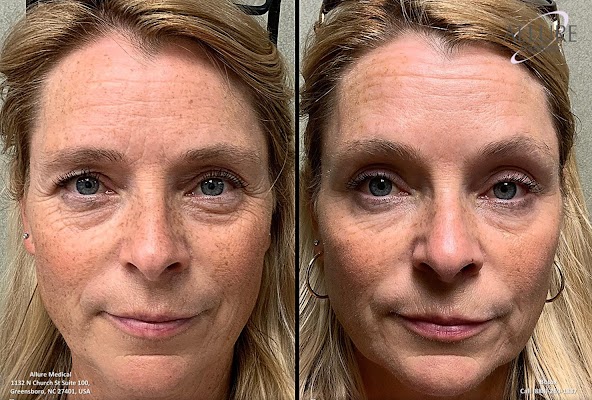
Done well, nasal tip rotation control with Botox is nearly invisible to the casual observer, yet it materially changes how a face animates. The patient sees that their tip no longer plunges when they laugh, their upper lip regains a sliver of length, and their profile in motion matches the promise of their still photos. The trick is disciplined technique: conservative initial dosing, precise mapping, slow injection, careful sequencing, and honest follow-up. When we respect those small rules, the result is not a frozen smile. It is a face that moves as intended, with the nose following along, not leading the conversation.